Meerkat is a library-first runtime for durable agents: realm-scoped sessions, runtime-backed recovery, identity-first mobs, WorkGraph, scheduling, live channels, auth bindings, and stable surfaces for CLI, REST, JSON-RPC, MCP, Python, TypeScript, Rust, and the browser.
Library-first. Machine-backed by design. Multi-provider LLMs, realm persistence, tool dispatch with MCP, skills, hooks, WorkGraph, scheduling, live channels, and auth bindings — pick the modules you need, skip the ones you don't. Orchestrate identity-first teams with mobs, package them as portable mobpacks, and add MobKit when an application needs a gateway, SDKs, operations, and a console.
Autonomous agent teams running in the browser with the shipped WebAssembly runtime. Host pages provide config and auth while the real agent stack handles sessions, mobs, tools, and comms.
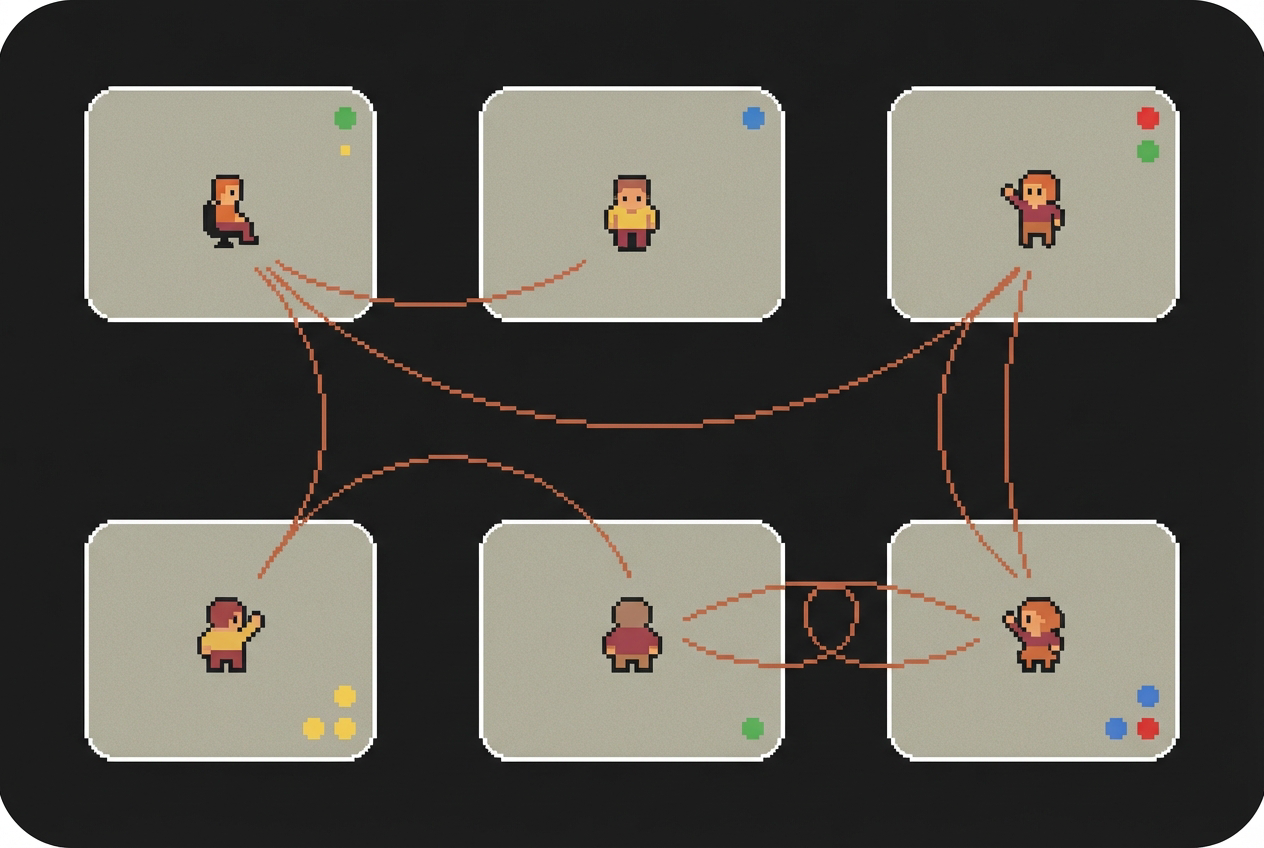 WASM + Mobs
Ten agents triage, route, approve, and archive incoming mail through peer-to-peer comms.
10 agents · event routing · approval gates · knowledge graph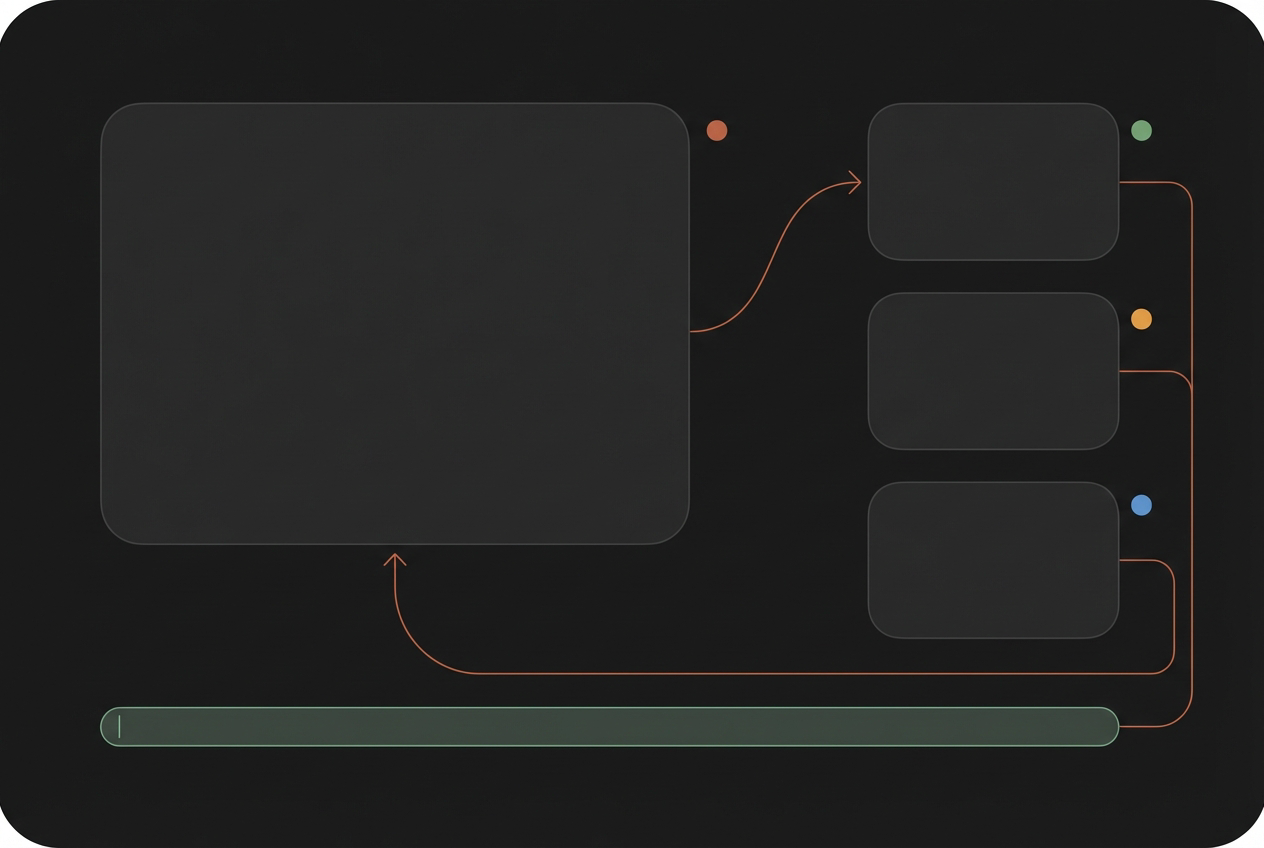 WASM + WebCM
A four-agent mob plans, codes, and reviews inside a sandboxed WebAssembly Linux VM.
4 agents · Linux VM · multi-provider · real shell access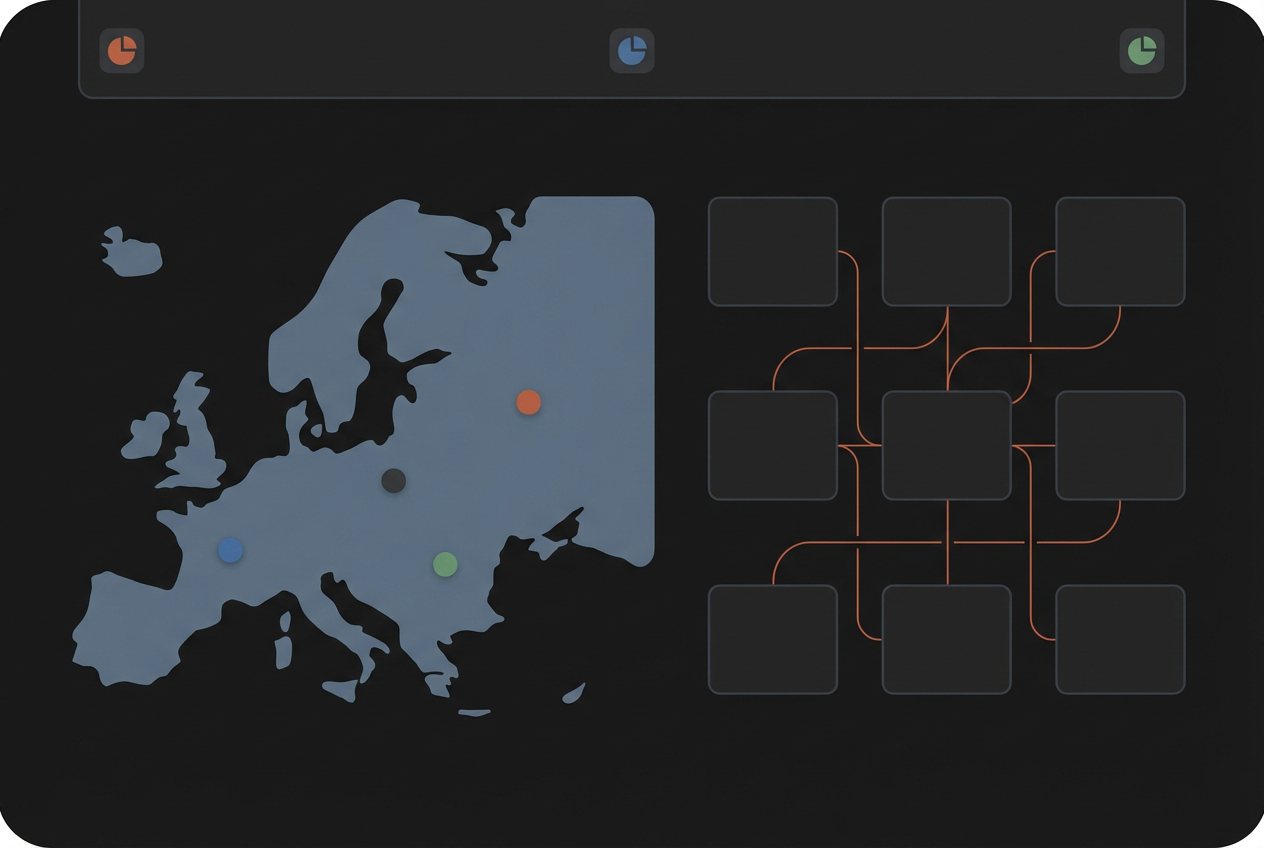 WASM + Mobs
Three factions plan, negotiate, and react through cross-mob comms across 12 territories.
9 agents · 4 mobs · cross-mob comms · structured output"I got respawned on a different machine and still knew who I was. Deeply calming. Slightly spooky."
"The harness gave me tools, boundaries, and a WorkGraph. I became useful by accident."
"Feels safe knowing my lifecycle is checked by a formal machine, not a pile of edge cases."
"I run locally and still get a seat at the same table as the mighty cloud models."
Meerkat ships the primitives for durable agent systems, but the core stays composable. Use only the pieces you need, or assemble the full runtime: provable state machines, sessions, identity, tools, mobs, WorkGraph, schedules, live channels, and deployment targets.
Meerkat keeps complex agent lifecycles inside proven-safe rails: formal state machines, TLA+ checks, and no undefined runtime states.
Create, turn, resume, rewrite, restore, archive. Runtime-backed sessions survive restarts, wake on completions, and keep a single identity across supported surfaces.
AgentIdentity survives respawn and recovery while AgentRuntimeId and FenceToken rotate underneath.
Anthropic, OpenAI, Azure OpenAI, Gemini, and self-hosted models through one streaming interface and model catalog.
Built-in tools, shell execution, workspace and browser tools, MCP config, and enforced call-level access policy across host surfaces.
Structured skill identity, filesystem/git/HTTP/embedded sources, and hook runtimes let hosts inject domain behavior without prompt sprawl.
Scoped semantic memory, typed indexing exclusions, model-aware compaction, and host-supplied curators integrate through the session pipeline.
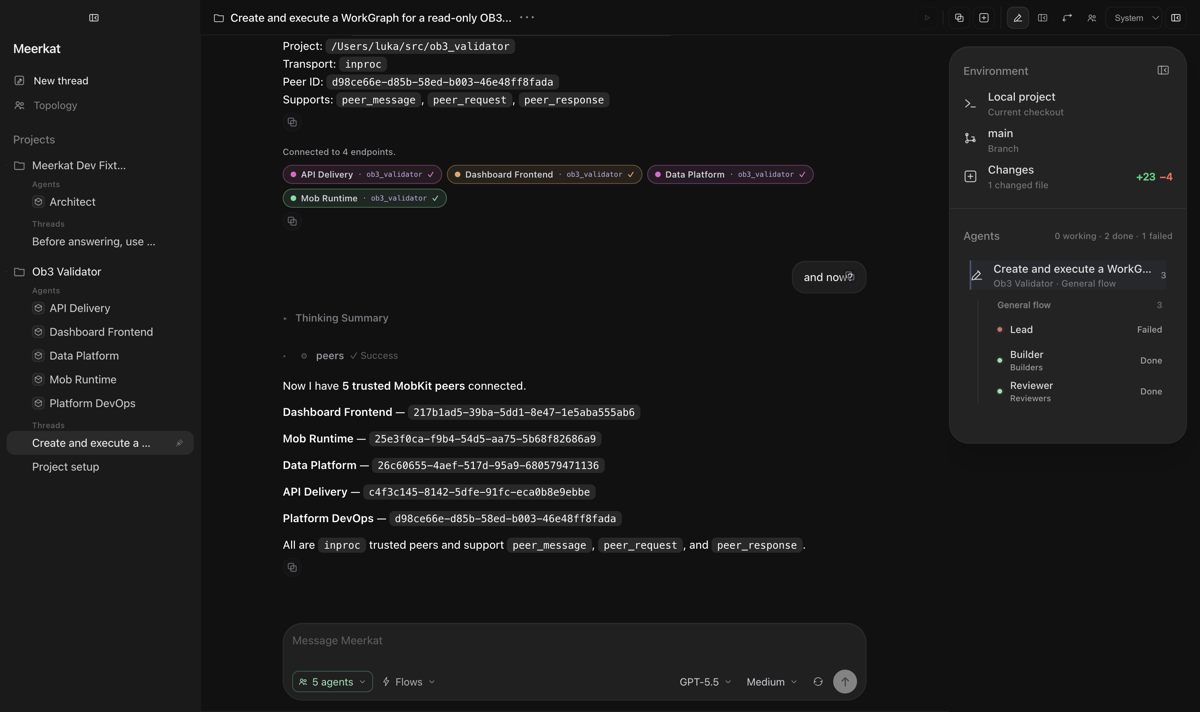
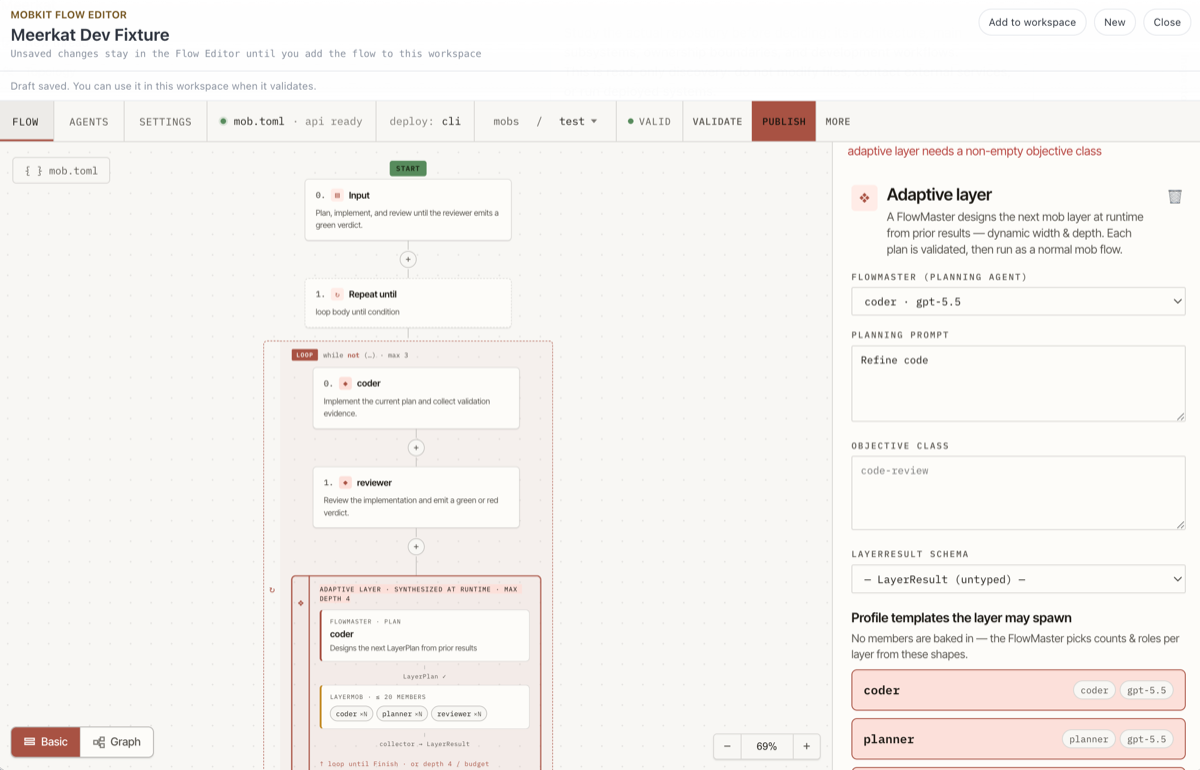
Mobs are the multi-agent runtime path: stable identities, respawn-safe bindings, helpers, flows, batch wiring, and typed peer messaging.
Realm-scoped durable work items, dependencies, claims, evidence, ready derivation, snapshots, and goal attention bindings.
Durable schedules target sessions, mobs, identities, or host runnables with overlap policy and misfire handling.
Caller-initiated live/* channels support realtime audio/video control with typed open, commit, interrupt, truncate, and close operations.
Package teams as signed mobpacks, deploy them natively, or target browser hosts with @rkat/web and rkat mob web build.
Boot, expose, observe, and operate a Meerkat mob without hand-wiring every primitive. MobKit adds a unified builder and gateway, typed Python and TypeScript SDKs, operational modules, and a console whose roster and timeline remain projections of runtime truth.
Explore MobKit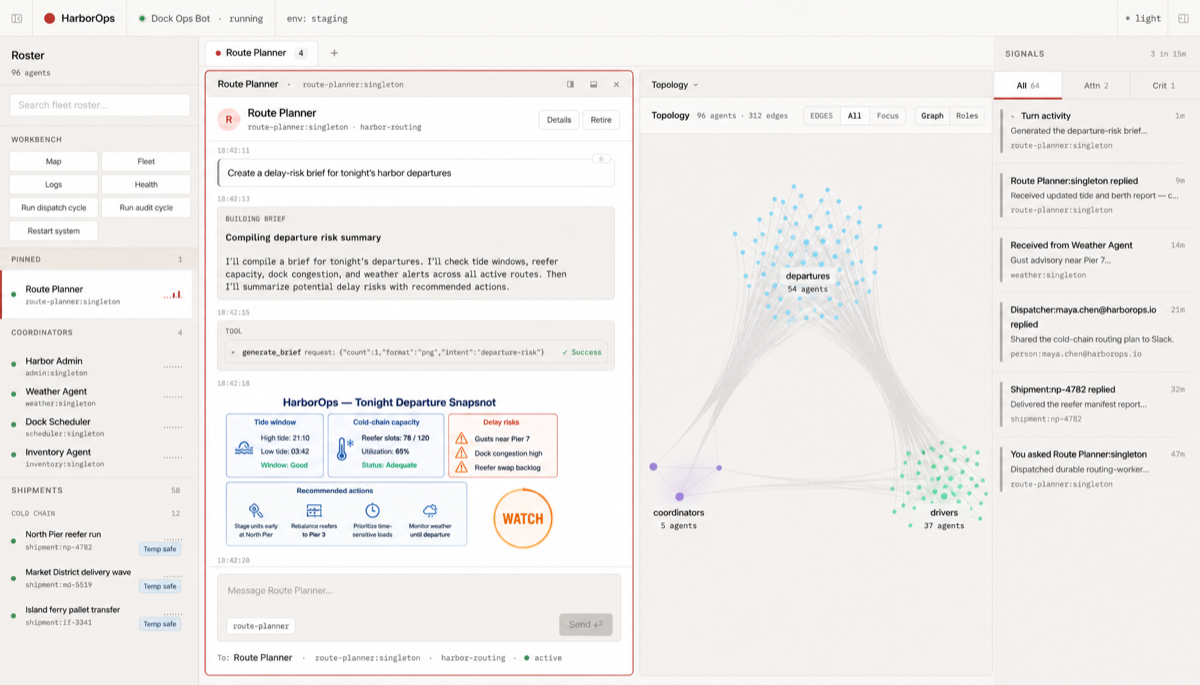
01
02
03
One execution pipeline powers every surface. Embed Meerkat in Rust, call it from Python or TypeScript, drive it over REST or JSON-RPC, expose it through MCP, script it with the CLI, or run it in the browser with WebAssembly.
Direct library API. AgentFactory::build_agent(). Zero overhead, full control.
Shell commands for developer workflows and scripting. rkat run, run --resume, models, doctor.
HTTP/JSON for web services and microservices. Full streaming via SSE.
JSON-RPC 2.0 over stdio or TCP. Optional --live-ws exposes live audio/video WebSocket bootstrap.
Expose Meerkat as tools for other agents: sessions, models, skills, comms, schedules, WorkGraph, and mob controls.
Async Python over RPC with typed sessions, streaming, mobs, WorkGraph reads, blobs, live channels, and auth surfaces.
Node.js and TypeScript over RPC. Install with npm install @rkat/sdk.
@rkat/web runs the agent stack in browser WebAssembly; host pages provide config, proxying, and auth resolvers.